


Why Do I Push Love Away? Understanding Attachment Wounds

You may want love deeply, then panic when it gets close.
Someone is kind. They show up. They are honest with you. They offer the kind of care you once dreamed of, and suddenly your body reacts as if danger has entered the room. You pull back. You become cold. You start a fight. You disappear. Or you cling so tightly that the relationship begins to feel unsafe for both of you.
This push-pull pattern can feel confusing and shameful. But often, it is not random. It can be a sign of an attachment wound, a place inside you where love, safety, trust, and loss became tangled together.
This article is for reflection and education. It is not a diagnosis or a replacement for therapy, especially if you are dealing with trauma, grief, abuse, panic, or thoughts of self-harm. If you feel unsafe, reach out to inner healing in Gods HEART.

Pushing love away is often a form of self-protection
When people talk about fear of intimacy, they sometimes make it sound like a choice. As if someone simply decides to be distant, difficult, or unavailable.
Often, the truth is more tender than that.
If love has hurt you before, your nervous system may treat closeness as a threat. You may not think, “This person is dangerous.” You may think, “Something feels off,” “I need space,” or “I cannot breathe.” The reaction can happen before you understand it.
That is why attachment wounds can be so hard to recognize. Your mind may want connection, while your body prepares for abandonment, betrayal, rejection, or grief.
This can show up as:
Wanting a relationship, then feeling trapped when someone commits
Feeling drawn to unavailable people, then bored or suspicious with available ones
Testing someone to see if they will leave
Ending things before the other person gets the chance
Becoming intensely attached very quickly
Feeling calm only when there is distance
Feeling anxious when messages are not answered right away
Assuming rejection even when there is no clear sign of it
This pattern is sometimes called anxious-avoidant behavior or the cycle of attracting and pushing away. One part of you reaches for love. Another part builds a wall.
The wall did not appear for no reason. At some point, it may have helped you survive.
Attachment wounds can begin earlier than you think
Attachment is shaped through repeated experiences of safety, comfort, repair, and emotional presence. A child does not need perfect parents. No one gets that. A child needs caregivers who are safe enough, present enough, and able to repair ruptures often enough.
When that does not happen, the child adapts.
Some children learn, “If I cry, no one comes.”
Some learn, “If I need too much, I become a burden.”
Some learn, “Love can disappear without warning.”
Some learn, “I must stay alert, because the mood can change at any moment.”
Some learn, “My feelings are too much for other people.”
These lessons may not be spoken, but the body remembers them.
A home can look stable from the outside and still feel emotionally unsafe inside. There may be money, food, clean clothes, vacations, and a beautiful house. Those things matter, but they cannot replace emotional attunement. Material comfort does not create secure attachment on its own.
A child needs to feel felt. A child needs to know that their fear, sadness, excitement, anger, and need for comfort will not make love disappear.
Sometimes parents cannot offer this because they never received it themselves. They may have grown up with emotional neglect, loss, harsh discipline, addiction, violence, or parents who were physically present but emotionally unreachable. Without healing, pain can pass quietly from one generation to the next.
That does not mean blame is the goal. Blame often keeps people stuck. The goal is to see clearly.
If your head is in the sand, you cannot see where the blows are coming from. Looking at the wound is not weakness. It is how healing begins.
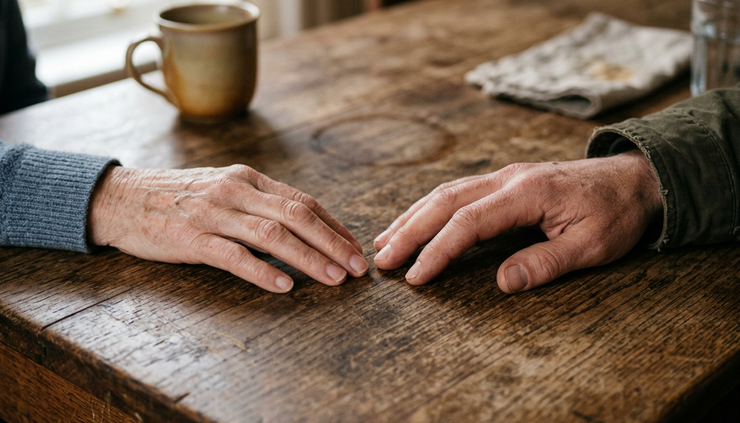
Trauma, grief, and rejection can teach the heart to hide
Not all attachment wounds begin in childhood. Some happen later.
A relationship may end in a traumatic way. Someone may leave suddenly, betray trust, become cruel, or withdraw love without explanation. If you opened your heart fully and were met with abandonment, your system may decide, “Never again.”
Pregnancy loss can also leave deep attachment pain. Losing a baby during pregnancy can affect the body, identity, faith, relationships, and the ability to trust life again. Some people feel grief not only over the loss itself, but over the bond that had already begun. Love had already formed. Dreams had already taken shape. The body may remember that love and loss arrived together.
Other experiences can also affect attachment:
Being repeatedly rejected or humiliated
Growing up unwanted or feeling unwanted
Being emotionally dismissed as a child
Losing a parent or caregiver
Living through a high-conflict divorce
Experiencing abuse or coercive control
Being abandoned by someone you trusted
Having a caregiver who was unpredictable
Being shamed for needing comfort
Some people carry the belief that they were unwanted even before birth. In some families, a child later hears stories of an unplanned pregnancy, stress, rejection, or conflict during that time. It is wise to speak carefully here. We cannot always know exactly what an unborn baby felt or understood. But we can say this: early family stories, parental stress, and the emotional environment around a child’s arrival can shape a person’s sense of belonging.
The wound may sound like:
“I was too much.”
“I was not chosen.”
“I am easy to leave.”
“If I attach, I will be destroyed.”
“If I love deeply, I will lose everything.”
When that wound is touched in adult love, the reaction can be intense. A partner may be five minutes late, and the body feels abandoned. Someone may need space, and it feels like rejection. A small disagreement may feel like the beginning of the end.
The present moment becomes mixed with the past.
The wall around your heart once had a purpose
If you push love away, you may judge yourself harshly.
“Why am I like this?”
“Why can’t I just accept love?”
“Why do I ruin good things?”
“Why do I run from people who are kind to me?”
A more compassionate question is, “What is this reaction trying to protect?”
The wall around your heart may protect you from:
Being left again
Depending on someone unsafe
Feeling grief you have not processed
Being disappointed after hoping
Losing control
Needing someone too much
Repeating an old family pattern
Walls are not always bad. If you grew up unsafe, your defenses were intelligent. They helped you get through something overwhelming. The problem comes when the same defenses stay in charge after the danger has passed.
A wall does not only keep pain out. It also keeps love from reaching you.
This is why healing does not mean forcing yourself to trust everyone. It means learning the difference between real danger and old fear. It means listening to your body without letting fear make every decision.
A helpful pause might sound like:
“What am I feeling right now?”
“What story am I telling myself about this person?”
“Does this remind me of someone from my past?”
“Am I reacting to what is happening, or to what I fear will happen?”
“What would help me feel safe without punishing the other person?”
These questions are simple, but they can interrupt the automatic cycle.

How attachment wounds affect parenting
One of the hardest questions is this: “How can I give my child secure attachment if I never knew safety myself?”
The answer begins with hope. You do not need a perfect past to become a safe parent. You need awareness, support, and a willingness to repair.
Secure attachment is not built by never making mistakes. It is built through repeated moments of connection and repair. A parent can lose patience, apologize, reconnect, and teach the child that conflict does not end love.
If you carry abandonment wounds, parenting may activate them. A baby’s crying might stir helplessness. A toddler’s independence might feel like rejection. A child’s anger might feel like danger. Their need for comfort might touch the young part of you that never received comfort.
This does not make you a bad parent. It means there is a wound asking for care.
You can begin by practicing small acts of secure connection:
Notice your child’s feelings without rushing to shut them down
Name emotions in simple language
Offer comfort before correction when a child is overwhelmed
Repair after yelling or withdrawing
Let your child know they are loved even when behavior needs guidance
Get support when your own reactions feel bigger than the moment
A child does not need wealth to feel safe. A child needs warmth, consistency, protection, and emotional presence. A poor family can offer deep security. A wealthy family can be emotionally cold. The size of the house does not determine the safety of the heart inside it.
The push-pull cycle can be changed
Attachment wounds can feel permanent, but they are not a life sentence.
Healing usually happens through safe relationships, honest self-reflection, and support that helps the nervous system learn something new. For many people, therapy is a key part of that.
You can also start noticing your pattern in real time.
When love comes close and fear rises, try to slow the moment down. Instead of disappearing, say, “I feel overwhelmed and need a little time, but I am not ending this conversation.” Instead of testing someone, say, “I am feeling insecure and could use reassurance.” Instead of assuming the worst, ask for clarity.
This does not mean handing your heart to someone who has not earned trust. Discernment matters. Some people are unsafe. Some relationships repeat harm. Healing includes learning boundaries, not abandoning them.
A secure bond has room for both closeness and space. It allows honesty without punishment. It allows needs without shame. It allows repair after conflict.
If someone kind comes toward you and every part of you wants to run, pause before you obey the fear. Ask what age that fear feels. Ask whose voice it carries. Ask what it remembers.
You may discover that the part of you pushing love away is not cold or broken. It may be young, scared, and tired of being left.

A gentler way to understand yourself
If you have pushed people away, it may help to separate responsibility from shame.
Shame says, “I am the problem.”
Responsibility says, “I want to understand my pattern so I do not keep hurting myself or others.”
That difference matters.
You may have been hurt many times. You may have trusted quickly and been left suddenly. You may have loved someone who could not love you safely. You may have grown up with parents who did their best but could not give what they never received. You may carry grief that changed the way your body experiences closeness.
None of this means you are unlovable.
It means your heart learned to protect itself. Now it may need to learn, slowly and with support, that protection and connection can exist together.
Start with one honest question: “What am I afraid will happen if I let love in?”
Do not rush the answer. Let it come gently. That answer may point to the wound beneath the wall, and the wound is where healing can begin.


Comments